Low aerial view of corn rows running to the horizon, under a clear sky.

Farmland and natural resources.

Long-term investment across South America, Australia and North America.

Thesis

Productive land is finite. Demand for food keeps growing.

Farmland combines two sources of value: the income from each harvest and a scarce physical asset that endures across cycles. Our thesis is to select land carefully and make it more productive without depleting its soil and water.

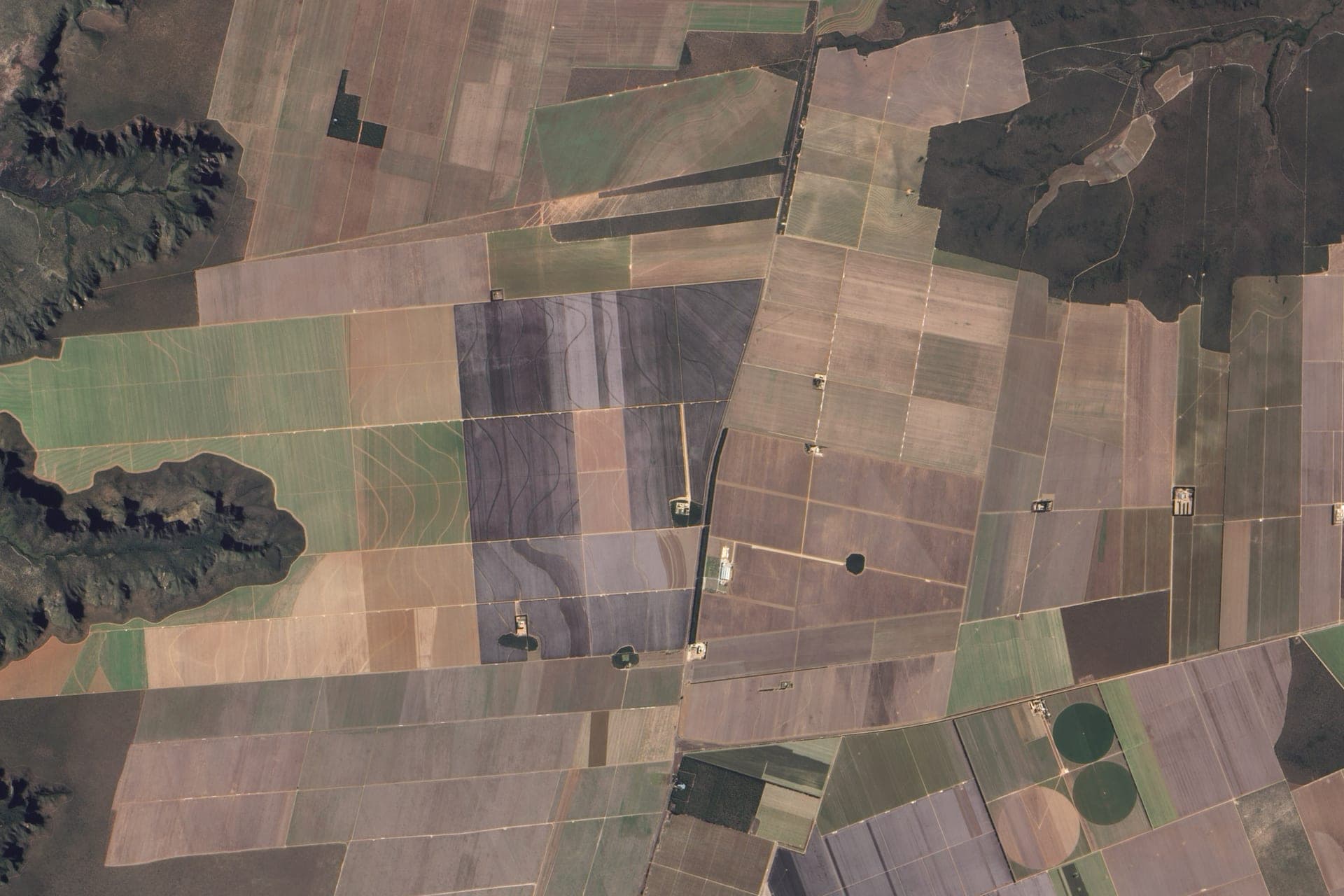
Satellite view of farmland near Luís Eduardo Magalhães in western Bahia, Brazil: earth-toned fields, contour banks that hold the soil, and the plateau's escarpment on the left.
  • A real, scarce asset

    The world’s arable land is limited, and cities, infrastructure and conservation all compete for it. Land with good soil, water and logistics cannot be manufactured.

  • Rising demand

    More people, higher incomes and more protein in the diet are lifting demand for food, feed and bioenergy.

  • Inflation and diversification

    Land is a real asset: over time, its income and value tend to keep pace with inflation, and they often respond to forces other than those that move equities and fixed income.

  • Productivity and management create value

    Soil improvement, irrigation, technology and on-farm management raise productivity, and higher income is gradually reflected in land value.

  • 10.3 billion

    people at the projected peak of world population in the mid-2080s, up from 8.2 billion in 2024Source 1

  • about 50% more

    food, feed and biofuel that agriculture will need to produce in 2050 than in 2012 to meet demandSource 2

Base map: Natural Earth (public domain).

Regions

Three regions of farming at scale.

All three have professional growers, deep technical expertise and established land markets. Each combines income, appreciation and risk differently, and diversifying across them is part of the thesis.

View all regions

17.1° S · 56.6° W

South America

Grains, oilseeds, sugarcane, coffee and livestock, with a strong export orientation. Scale and competitive costs, with room to create value by raising productivity⁠—for example, by restoring degraded pasture.

South America in detail
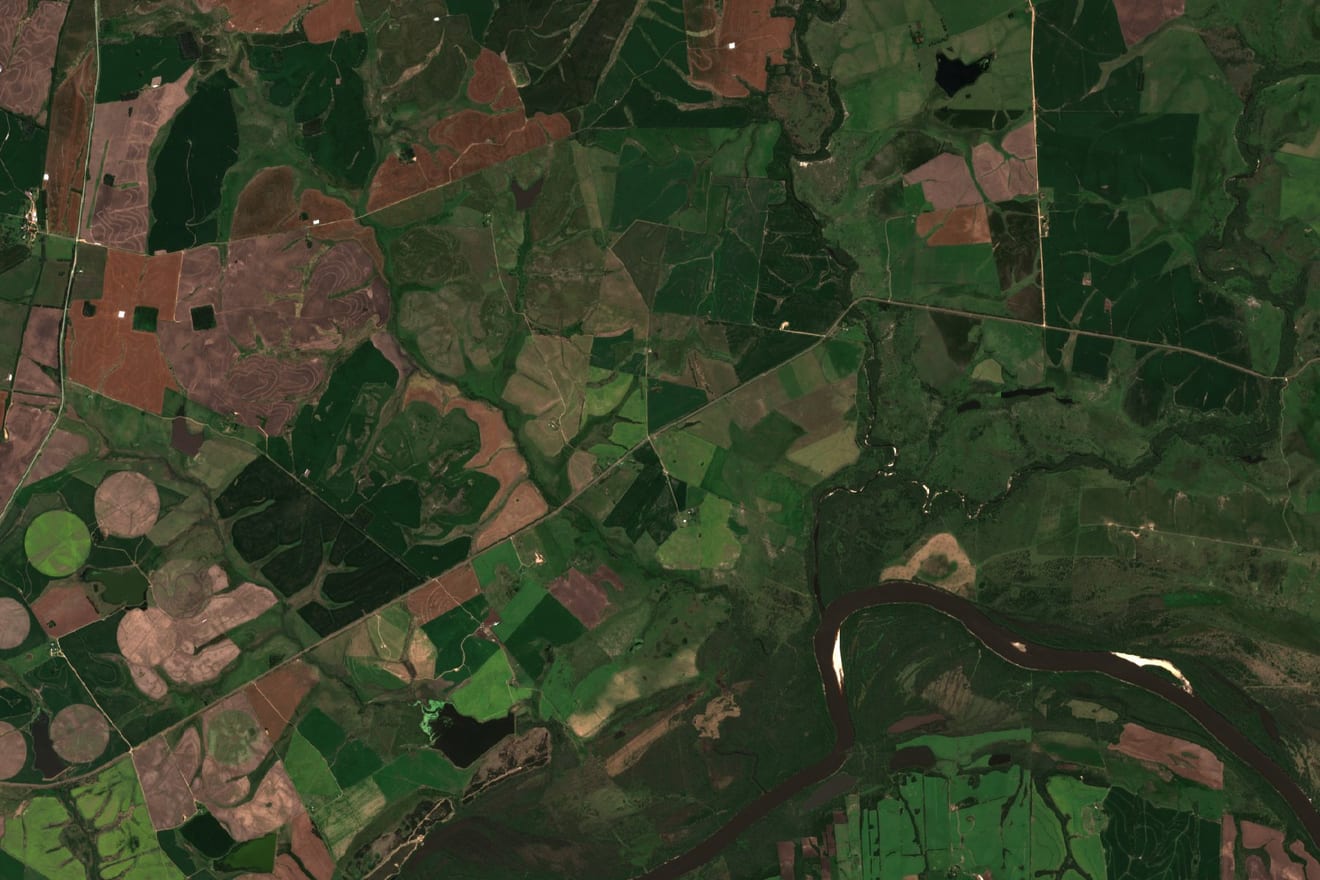
Natural-color satellite image, 18 by 12 kilometers: cropland and grassland along the Río Negro in western Uruguay, on September 24, 2025.
Pampas · Sentinel-2B · Sep 24, 2025Contains modified Copernicus Sentinel data 2025

25.8° S · 134.3° E

Australia

Dryland grains, livestock and high-value irrigated crops. Developed water markets and proximity to Asian demand.

Australia in detail
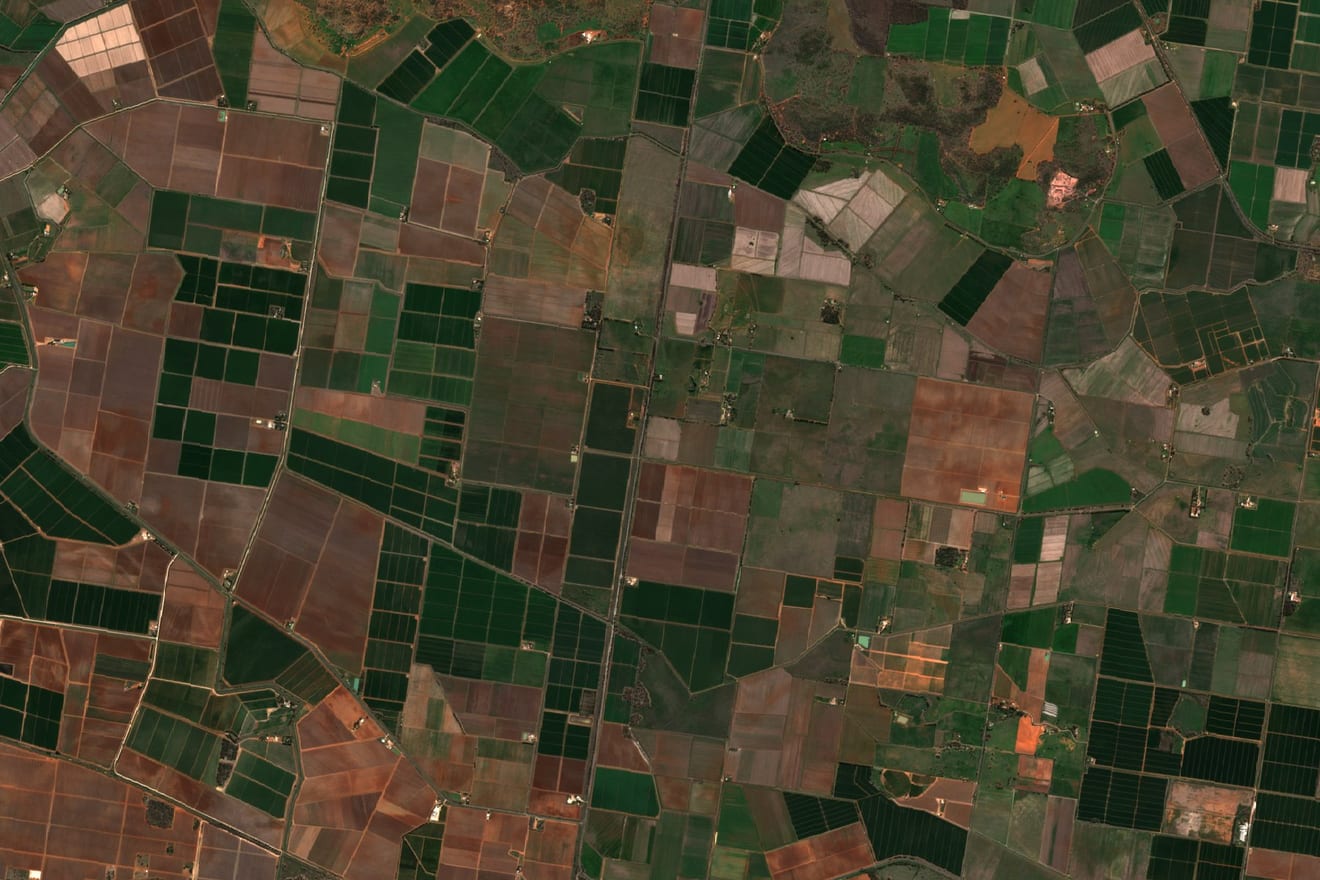
Natural-color satellite image, 18 by 12 kilometers: rectangular fields near Murrami, in the Riverina (New South Wales, Australia), on August 19, 2025.
Riverina · Sentinel-2B · Aug 19, 2025Contains modified Copernicus Sentinel data 2025

52.9° N · 100.6° W

North America

Large-scale grains and oilseeds, and permanent crops such as orchards and vineyards. A mature market, with long records of land values and cash rents.

North America in detail
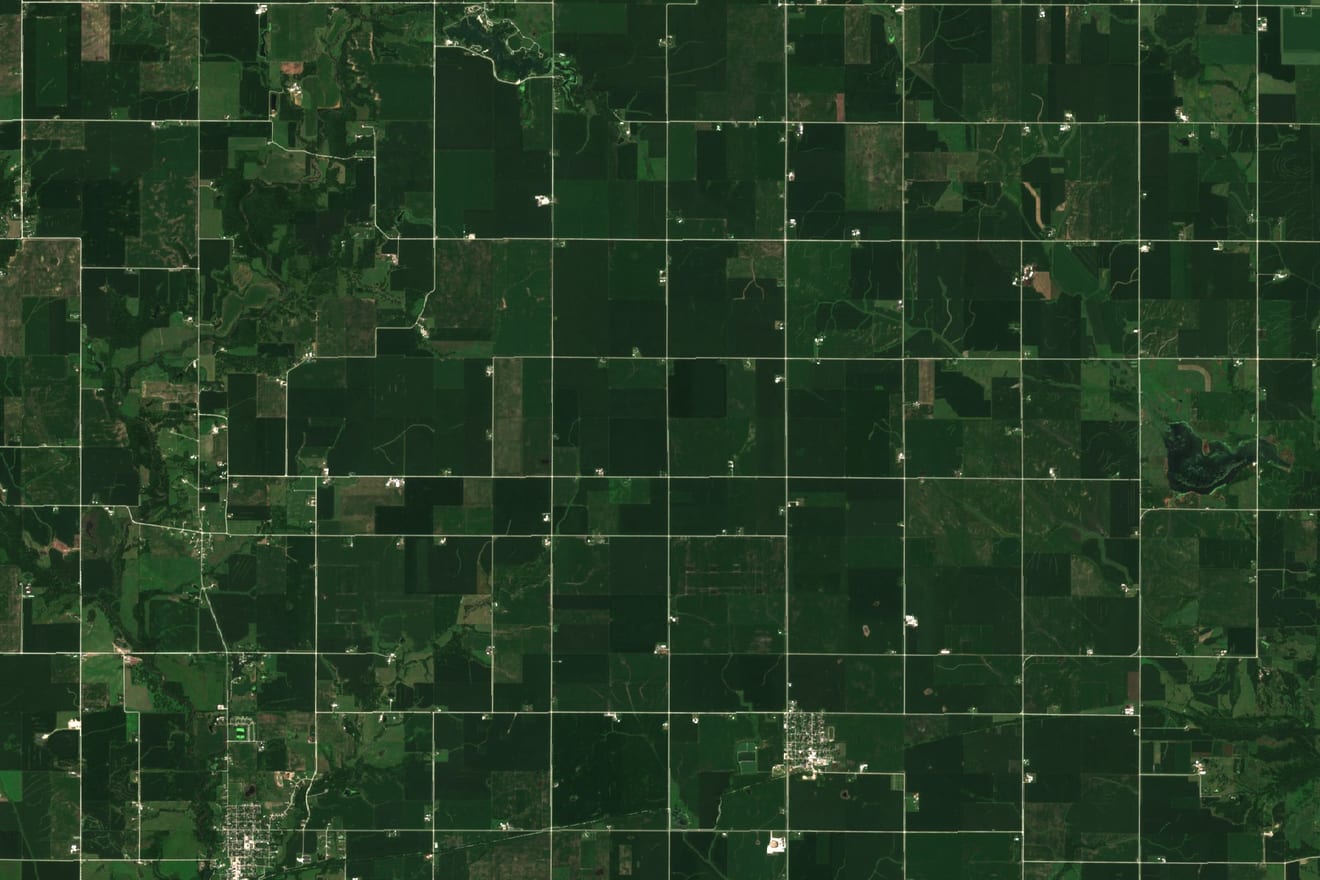
Natural-color satellite image, 18 by 12 kilometers: fields on the one-mile road grid near Collins and Maxwell, in Story County, Iowa (United States), on July 14, 2025.
Iowa · Sentinel-2C · Jul 14, 2025Contains modified Copernicus Sentinel data 2025

Approach

Six stages, from sourcing to exit.

Every investment follows the same path, and each stage leaves a documented record of what was verified.

Our approach in full
  1. Origination

    Sourcing land with sound fundamentals⁠—soil, water, climate, logistics and title⁠—directly from landowners and through local partners.

  2. Due diligence

    Soil and water tested in the field, production history, chain of title, environmental compliance and market assumptions, before any commitment is made.

  3. Structuring

    Acquisition, lease or partnership, shaped around each investor’s objectives and each country’s rules, with governance and aligned interests from the outset.

  4. Operations

    Hands-on management in the field, with selected local operators, season-by-season budgets and closely tracked metrics.

  5. Stewardship

    Soil, water, native vegetation and people managed as part of the asset’s value, with targets and indicators throughout the holding period.

  6. Realization

    An exit planned from entry⁠—through sale, recapitalization or contract renewal⁠—in step with the farming cycle and market conditions.

Stewardship

Soil, water, nature and people.

These four factors determine what the land yields over the years, which is why each one has its own objectives in every property’s plan.

Soil
No-till, cover crops and rotation, with fertility managed through soil testing.
Water
Efficient irrigation, water rights and permits in good standing, and protection of springs and riparian areas.
Biodiversity
Native vegetation and protected areas preserved, wildlife corridors maintained and pests controlled through integrated management.
People
Safe, formal employment, local operators and communities as long-term partners, and open dialogue with neighbors.
Read our principles

Contact

For investors and landowners.

We welcome inquiries from institutional investors, family offices and landowners interested in farmland investment. The first conversation is confidential.